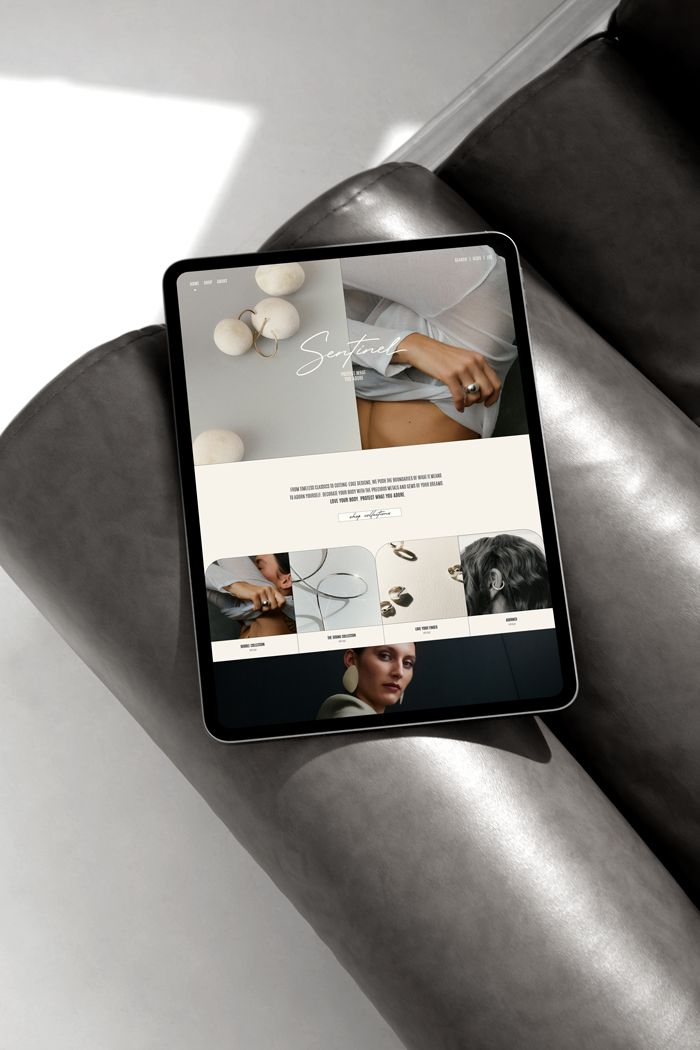
Why Your Website isn't Selling (even if it looks great)
If customers can’t understand you fast, they won’t buy.
Most websites don't fail because they’re ugly. They fail because they’re unclear.
Founders often assume their website needs a “better design” to convert.
But in reality, most conversion problems have nothing to do with aesthetics.
They have everything to do with visual language.
A trendy site can still miss the one thing customers actually need: clarity.
Over and over, what breaks conversions are clarity issues.
1. Your hero section doesn’t tell people what you sell
If someone has to read twice, your conversion is already dropping.
Most hero sections focus on being poetic, clever, or brand-y.
But customers want one thing: “What do you sell and why should I care?”
If your hero doesn’t answer that in 3 seconds, they bounce.
Not because they don’t like your product but because they don’t understand it fast enough.
2. Your product’s biggest value isn’t obvious
Brands often hide their strongest selling point.
Dyson never starts with aesthetics.
Their hero always says the value first:
“Stronger suction.” “Captures 99.9% of particles.”
People buy because they instantly know why it’s better.
If those three things don’t align, your customer won’t feel a reason to buy.
3. Your visuals don’t match your message
Good visuals aren’t just images. They’re communication.
If you sell your products at a premium price, but your images look generic, customers assume the product is generic.
If you sell comfort, but your visuals feel cold, people don’t feel comfort.
If you sell innovation, but your brand looks outdated, trust drops instantly.
Visuals should signal the feeling your offer delivers.
4. Your site feels like a “portfolio,” not a sales tool
Founders sometimes treat their website like a moodboard — lots of photos, little direction.
But customers need:
guidance
reassurance
clarity
reasons
Not just vibes.
A website is a strategic system: the structure, wording, order, and flow all work together to move someone toward a decision.
Design is the wrapper.
Strategy is the engine.
5. Your site speaks to everyone: which means it speaks to no one
When brands try to appeal to “anyone who might buy,” messaging becomes vague:
“premium quality”
“designed for everyone”
“made for your lifestyle”
These phrases sound nice but say nothing.
High-converting sites speak to one type of person with one clear problem.
If you don’t define who you're talking to, your customers won’t feel seen and they won’t buy.
Final Thoughts
A website’s job isn’t to impress.
Its job is to communicate, guide, and convert.
When you understand your audience, define your offer clearly, and build a visual language around the feeling your brand delivers. Your website stops being a brochure and starts being a revenue engine.
Most brands don’t need a redesign.
They need direction.
Founders often assume their website needs a “better design” to convert.
But in reality, most conversion problems have nothing to do with aesthetics.
They have everything to do with visual language.
A trendy site can still miss the one thing customers actually need: clarity.
Over and over, what breaks conversions are clarity issues.
1. Your hero section doesn’t tell people what you sell
If someone has to read twice, your conversion is already dropping.
Most hero sections focus on being poetic, clever, or brand-y.
But customers want one thing: “What do you sell and why should I care?”
If your hero doesn’t answer that in 3 seconds, they bounce.
Not because they don’t like your product but because they don’t understand it fast enough.
2. Your product’s biggest value isn’t obvious
Brands often hide their strongest selling point.
Dyson never starts with aesthetics.
Their hero always says the value first:
“Stronger suction.” “Captures 99.9% of particles.”
People buy because they instantly know why it’s better.
If those three things don’t align, your customer won’t feel a reason to buy.
3. Your visuals don’t match your message
Good visuals aren’t just images. They’re communication.
If you sell your products at a premium price, but your images look generic, customers assume the product is generic.
If you sell comfort, but your visuals feel cold, people don’t feel comfort.
If you sell innovation, but your brand looks outdated, trust drops instantly.
Visuals should signal the feeling your offer delivers.
4. Your site feels like a “portfolio,” not a sales tool
Founders sometimes treat their website like a moodboard — lots of photos, little direction.
But customers need:
guidance
reassurance
clarity
reasons
Not just vibes.
A website is a strategic system: the structure, wording, order, and flow all work together to move someone toward a decision.
Design is the wrapper.
Strategy is the engine.
5. Your site speaks to everyone: which means it speaks to no one
When brands try to appeal to “anyone who might buy,” messaging becomes vague:
“premium quality”
“designed for everyone”
“made for your lifestyle”
These phrases sound nice but say nothing.
High-converting sites speak to one type of person with one clear problem.
If you don’t define who you're talking to, your customers won’t feel seen and they won’t buy.
Final Thoughts
A website’s job isn’t to impress.
Its job is to communicate, guide, and convert.
When you understand your audience, define your offer clearly, and build a visual language around the feeling your brand delivers. Your website stops being a brochure and starts being a revenue engine.
Most brands don’t need a redesign.
They need direction.


Let’s keep in touch.
Find more Insights and Tips on Brand Strategies